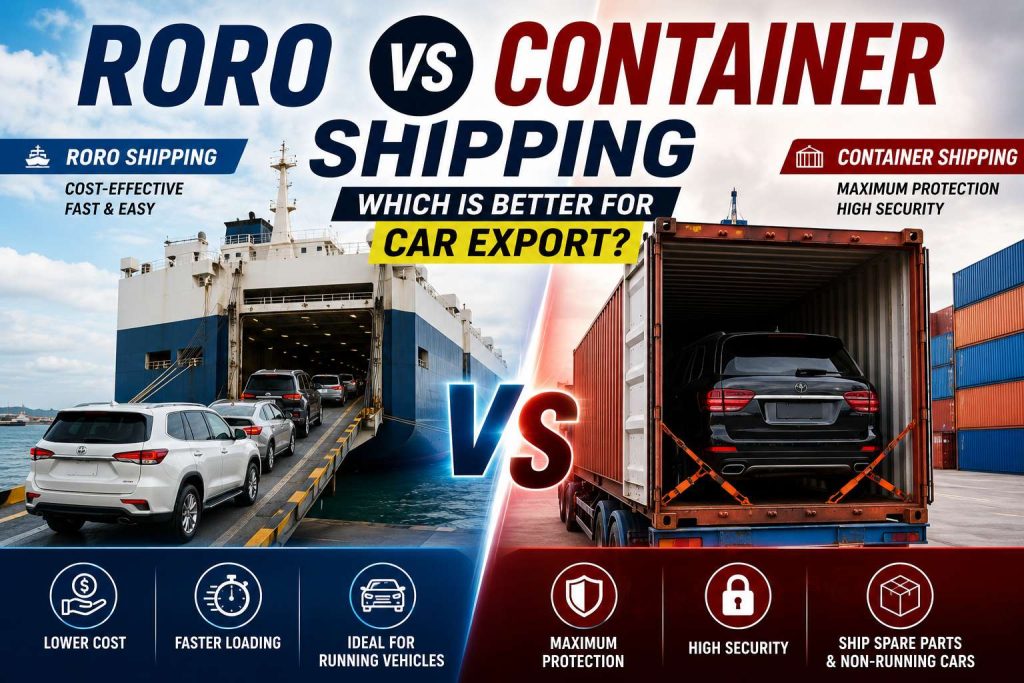
Importing and exporting cars internationally requires choosing the right shipping method. For buyers, dealers, and exporters, the two most common vehicle shipping options are RoRo shipping and Container shipping.
Both methods are widely used in global car export markets, but each has different advantages, pricing structures, safety levels, and shipping processes.
Whether you are exporting cars from Dubai, Japan, Europe, or the USA, understanding the difference between RoRo and Container shipping helps you reduce costs, avoid delays, and protect your vehicle during international transport.
In this detailed guide, we compare RoRo vs Container shipping based on cost, safety, speed, vehicle type, destination suitability, and export business profitability.
What is RoRo Shipping?
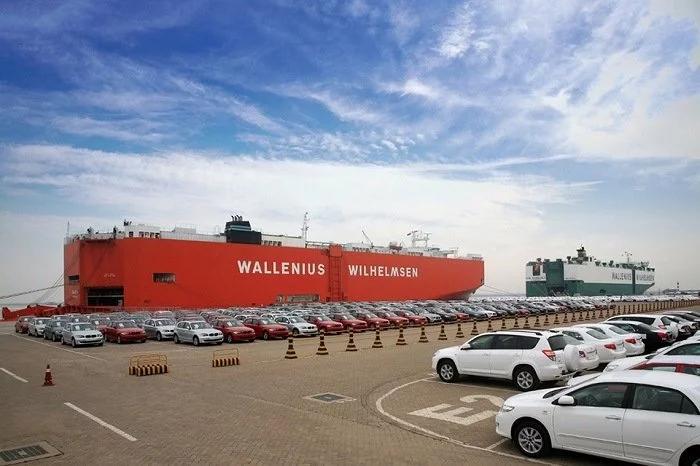
In this method, vehicles are driven directly onto a specialized car carrier vessel and secured inside the ship for transportation.
RoRo ships are designed specifically for transporting vehicles such as:
- Cars
- SUVs
- Pickup trucks
- Buses
- Heavy machinery
The vehicle is rolled onto the vessel at the departure port and rolled off at the destination port.
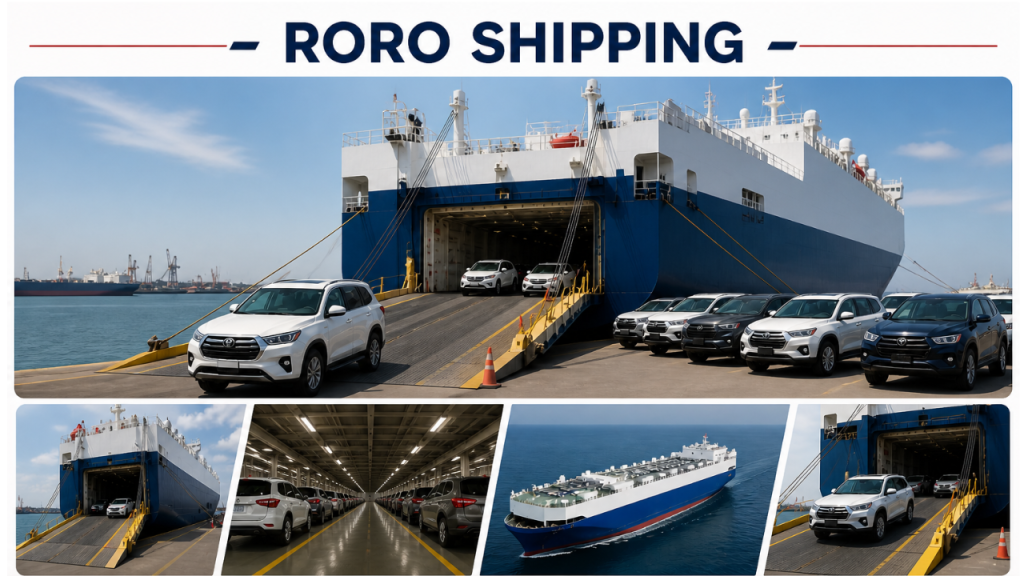
How RoRo Shipping Works
- Vehicle arrives at the export port
- Customs clearance is completed
- Vehicle is driven into the RoRo vessel
- Vehicle is secured inside the deck
- Ship transports the vehicle internationally
- Vehicle is driven off at destination port
RoRo Shipping Advantages
Lower Shipping Cost
RoRo is usually the cheapest method for shipping vehicles internationally.
Because many vehicles are transported together, shipping companies can reduce transportation costs.
This makes RoRo ideal for:
- Budget buyers
- Car dealers
- First-time importers
- African export markets
Faster Loading Process
Vehicles are simply driven into the ship.
This reduces:
- Port handling time
- Loading delays
- Operational complexity
RoRo vessels are highly efficient for large-scale exports.
Ideal for Running Vehicles
RoRo works best for:
- Operational vehicles
- Standard passenger cars
- SUVs
- Commercial vehicles
Large Global Network
RoRo shipping routes are available across:
- Africa
- Europe
- Middle East
- Asia
- North America
Major export hubs include:
- Dubai
- Japan
- Belgium
- Germany
- South Korea
RoRo Shipping Disadvantages
Less Protection
Vehicles remain exposed inside shared ship decks.
Although secured safely, they are not enclosed like containers.
This means:
- Less privacy
- Less protection from minor scratches
- No personal items allowed inside the vehicle
Limited for Luxury Vehicles
High-value luxury cars are often not recommended for RoRo shipping because of:
- Higher risk exposure
- Insurance concerns
- Security limitations
Vehicle Must Be Drivable
Non-running vehicles usually cannot be shipped through RoRo.
The car must:
- Start properly
- Move independently
- Have functioning brakes and steering
What is Container Shipping?
Container shipping involves loading vehicles inside sealed shipping containers for international transport.
Containers are loaded onto cargo ships and transported worldwide.
Common container sizes include:
- 20-foot container
- 40-foot container
Depending on vehicle size:
- One or multiple vehicles can fit inside a container.
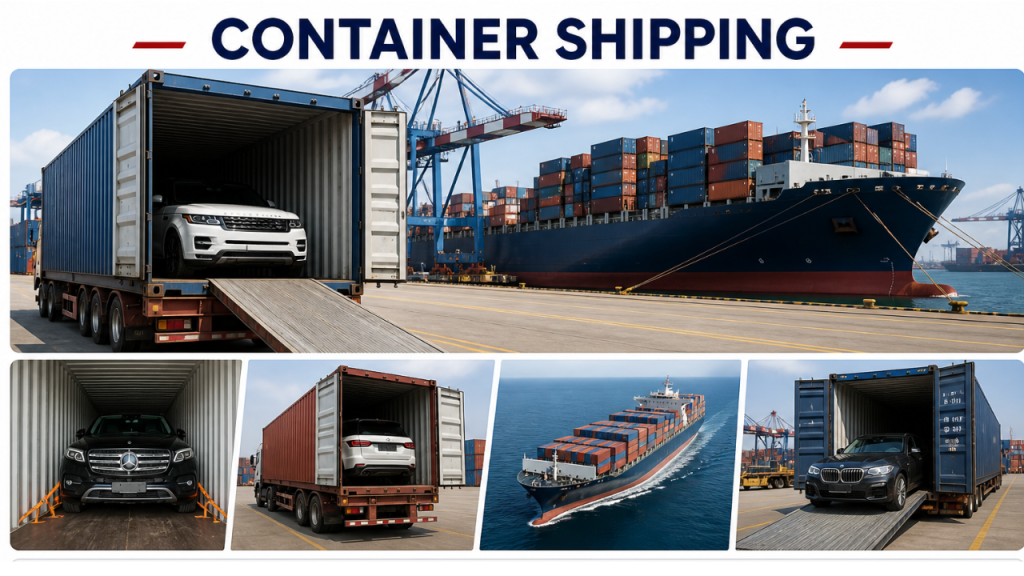
How Container Shipping Works
- Vehicle arrives at warehouse or port
- Vehicle is loaded into container
- Vehicle is secured using straps and supports
- Container is sealed
- Container is loaded onto cargo ship
- Container is opened at destination port
Container Shipping Advantages
Maximum Protection
Container shipping offers significantly better protection compared to RoRo.
Vehicles remain:
- Fully enclosed
- Protected from weather
- Protected from dust and sea exposure
- More secure from external handling
This makes it ideal for:
- Luxury cars
- Exotic vehicles
- Classic cars
- High-value exports
Better Security
The container remains sealed during transport.
This reduces:
- Theft risk
- Damage risk
- Unauthorized access
Ability to Ship Spare Parts
Container shipping allows exporters to include:
- Spare parts
- Tires
- Accessories
- Personal items
This is highly beneficial for dealers and exporters.
Suitable for Non-Running Cars
Unlike RoRo, non-operational vehicles can still be shipped in containers using forklifts or cranes.
Container Shipping Disadvantages
Higher Cost
Container shipping is more expensive because:
- Container rental costs apply
- Loading labor costs apply
- Port handling charges are higher
This can increase export expenses significantly.
Longer Loading Process
Vehicles require:
- Positioning
- Securing
- Container preparation
This increases operational time.
Port Congestion Risks
Container cargo sometimes faces:
- Delays
- Customs inspections
- Port congestion
Transit times may become longer during peak shipping seasons.
RoRo vs Container Shipping Comparison
| Feature | RoRo Shipping | Container Shipping |
|---|---|---|
| Cost | Lower | Higher |
| Security | Moderate | High |
| Vehicle Protection | Basic | Excellent |
| Luxury Cars | Less Ideal | Best Option |
| Shipping Speed | Faster | Slightly Slower |
| Non-Running Cars | Not Suitable | Suitable |
| Spare Parts Allowed | No | Yes |
| Best For | Budget exports | Premium exports |
Which Shipping Method is Better for Africa?
For African markets, RoRo shipping is often preferred because:
- Shipping costs are lower
- Transit times are fast
- SUVs and used cars dominate demand
Popular African destinations:
- Kenya
- Tanzania
- Uganda
- Nigeria
- Ghana
RoRo is highly popular for:
- Toyota vehicles
- Nissan SUVs
- Used Japanese cars
- GCC-spec vehicles
Which Shipping Method is Better for Europe?
For Europe, container shipping is commonly preferred for:
- Luxury cars
- Premium SUVs
- High-value vehicles
European buyers often prioritize:
- Vehicle condition
- Paint protection
- Compliance safety
Countries with strong container demand include:
- Germany
- France
- Netherlands
- Belgium
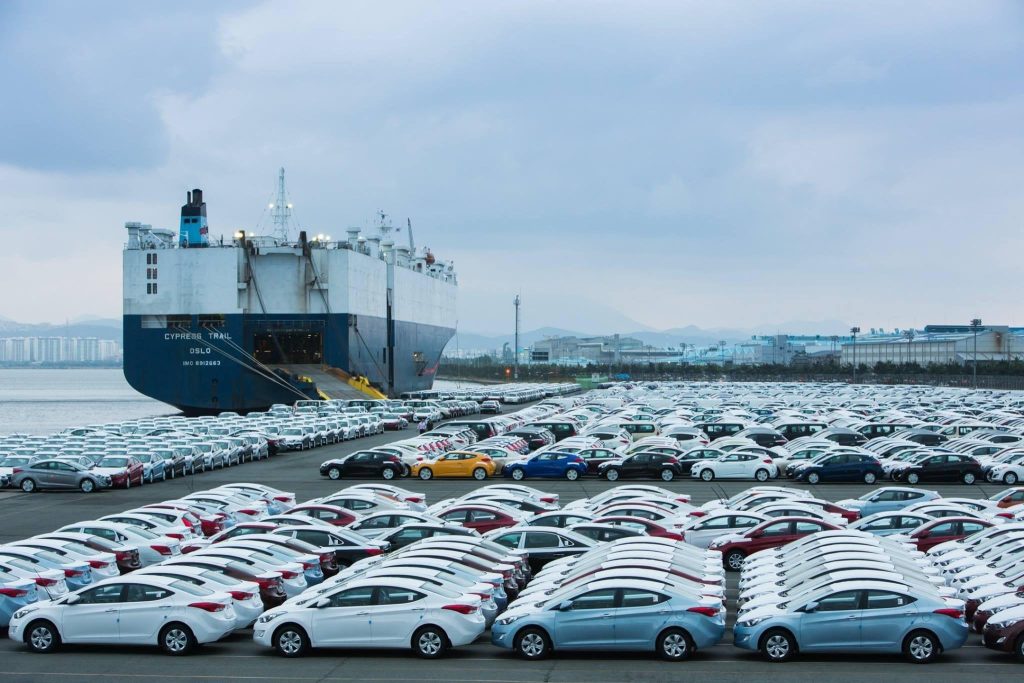
Best Vehicles for RoRo Shipping
Ideal RoRo Export Cars
- Toyota Corolla
- Nissan Sunny
- Toyota Prado
- Nissan Patrol
- Hyundai Tucson
These vehicles are:
- Reliable
- Easy to transport
- Cost-efficient for export
Best Vehicles for Container Shipping
Ideal Container Export Cars
- Mercedes-Benz G-Class
- Lexus LX
- BMW 7 Series
- Range Rover
- Ferrari and luxury sports cars
Container shipping provides better safety for premium vehicles
Shipping Costs in 2026
Shipping costs depend on:
- Destination country
- Vehicle size
- Port charges
- Fuel prices
- Shipping season
General Cost Trend
RoRo Shipping
Usually cheaper for:
- Single vehicles
- Budget exports
- Standard SUVs
Container Shipping
Usually more expensive but safer for:
- Luxury cars
- Multiple vehicles
- Spare parts shipments
How to Choose the Best Shipping Method
Choose RoRo Shipping If:
- You want lower export costs
- Vehicle is operational
- You are exporting economy cars
- You want faster shipping
Choose Container Shipping If:
- Vehicle is luxury or high-value
- You need maximum safety
- You want to ship spare parts
- Vehicle is non-running
Final Verdict
Both RoRo and Container shipping offer excellent solutions depending on your export goals, budget, and vehicle type.
RoRo shipping is ideal for:
- Affordable exports
- Fast transportation
- Standard operational vehicles
Container shipping is best for:
- Luxury vehicles
- Better protection
- High-security transport
The best choice depends on:
- Destination country
- Vehicle value
- Shipping budget
- Import regulations
- Risk tolerance
Before exporting any vehicle, always work with a trusted export company that provides:
- Inspection reports
- Customs support
- Shipping documentation
- Transparent pricin

Leave a Reply